Israel will hold national elections on October 27, 2026, and significant get-out-the-vote (GOTV) efforts are already underway in Arab society. Arab citizens constitute approximately 16% of the electorate, and their turnout can significantly affect the distribution of seats between the competing political blocs. In a close election, the Arab vote can therefore make or break a governing majority—but only if the parties seeking to form a government are willing to cooperate with Arab representatives or rely on their parliamentary support. This distinction between electoral weight and actual political influence lies at the heart of the current debate.
According to a recent survey conducted by the Konrad Adenauer Program, 77% of Arab respondents support the inclusion of an Arab party in the governing coalition, while 63.7% support Jewish-Arab political partnership. Support remains high regardless of political party: 77.2% of Hadash-Ta’al voters, 95.4% of Ra’am voters, 67.6% of Balad voters, 90.6% Arab voters voting for Jewish parties, and 62.6% of those not intending to vote in support of an Arab party joining the governing coalition. These findings reflect a steady increase in public support for political participation as a means of influencing government policy.
Increasing Turnout and Motivating Issues
Many Arab citizens recognize that their participation can influence who governs Israel yet remain skeptical that any resulting government will address their priorities or treat Arab representatives as legitimate political partners. According to The Abraham Initiatives, women and young people represent the greatest potential for increasing turnout in Arab society, but both groups require targeted engagement. Arab women are less likely than men to say they will “definitely” vote but that does not mean they are disengaged. Social perceptions—particularly the view that politics is primarily a male domain—remain a significant barrier, even as surveys show that greater representation of women in political parties increase women’s participation, and that higher turnout among women could positively influence the future of Arab society.
Among young Arab citizens (ages 18–34), expected turnout is approximately 59%, yet confidence in the political system remains fragile. Young voters consistently report that their willingness to participate depends on whether politics addresses their everyday concerns. Around three-quarters say that issues such as personal security, employment, and socio-economic conditions will strongly influence their decision to vote, while many emphasize the need for concrete plans and practical solutions rather than general calls for change.
The issues motivating Arab voters are largely immediate and pragmatic. Surveysshow that Arab voters are primarily motivated by practical, day-to-day concerns rather than ideological issues. At the same time, voting carries a powerful ideological dimension: Is the objective to obtain budgets, services and direct influence inside government, or to represent the Palestinian national identity and influence state policy from outside the coalition? This tension between pragmatic influence and ideological representation shapes nearly every major political development within Arab politics today.
Mansour Abbas, Yoav Segalovitz, and Ra’am’s Transformation
In a clear expression of pragmatism, Mansour Abbas’s party separated from the Islamic Movement, though many members remain active. The separation means that the Islamic Movement and its advisory body, the Shura Council, will not be involved in Ra’am’s political decision making, including selection of Knesset candidates. Ra’am will have its first primary for Knesset candidates on August 22.
According to recent reports, Ra’am is exploring a joint ticket with former Yesh Atid MK Yoav Segalovitz, who led the efforts against crime in Arab society as the Deputy Minister of Internal Security in the former government. Ra’am’s created new precedent in 2021 by becoming the first Arab party to sit in a governing coalition.
Running with MK Segalovitz would strengthen their positioning as a legitimate governing partner capable of translating electoral support into tangible policy achievements while aiming to broaden Ra’am’s appeal and legitimacy as a potential coalition partner. Previously, Ra’am conditioned joining a revived Joint List on retaining the freedom to leave any unified Arab slate after the election and enter a governing coalition also reflects its central argument: Arab electoral power should be exchanged for concrete achievements on crime, housing, budgets and public services.
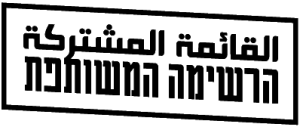
The attempt to revive the Joint List represents both an electoral strategy and a response to public demand for unity. According to the Konrad Adenauer Program’s May 2026 survey, expected voter turnout among Arab citizens stands at approximately 53%. If the Joint List is reestablished, however, turnout is projected to rise to 67%, with the alliance potentially winning as many as 16 Knesset seats. Hadash, Ta’al and Balad have announced a joint framework and continue to leave the door open to Mansour Abbas’ Ra’am. Their unity could increase turnout, reduce the danger of votes being lost below the 3.25% electoral threshold and project collective strength. Yet the disagreement with Ra’am is substantive: the three parties are more reluctant to sit in a governing coalition while Ra’am insists that coalition participation must remain an option. Public frustration is therefore directed not only at political fragmentation, but also at the parties’ apparent inability to reconcile two competing models of influence.
Joint List Logo
Jewish-Arab Parties, Partnership, and Discourse
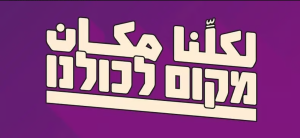
New Jewish-Arab political initiatives add another dimension. “A Place for Us All,” created by leaders of Standing Together, places peace, equality and Jewish-Arab partnership at the center of its platform and seeks to mobilize young people and citizens who feel unrepresented by the existing parties. Its supporters argue that it could expand the electorate rather than redistribute existing votes. Critics argue that an additional small list could struggle to cross the electoral threshold, potentially weakening the broader anti-government bloc. The question among political strategists is therefore not whether its message is important, but whether an independent electoral run is the most effective vehicle for advancing it.
“A Place for Us All” Logo
Arab participation is also becoming more visible in predominantly Jewish or Zionist parties. The Democrats party, led by Yair Golan and formed by a 2024 merger of the Labor and Meretz parties, held their primary on July 20. An activist for Jewish-Arab partnership, Somaya Bashir won tenth place, while several additional Arab and Druze candidates competed. Its significance will depend, however, on whether these candidates receive realistic Knesset positions and whether their parties are willing to include Arab society’s concerns in their central—not merely symbolic—agenda.
Finally, the campaign’s treatment of Arab political participation may itself shape Arab voter turnout. A central message of the current governing coalition’s campaign is that the opposition cannot form a government without the support of Arab parties, portraying such dependence as illegitimate or dangerous. This delegitimization can deepen political alienation and depress turnout among Arab voters.
Share page
How Can We Help?
Do you need support integrating these resources and issues into your philanthropic, communal, or Israel education work? Reach out for consultations, connections to experts, program support, training, or to plan your next event or mission. If you’ve used our resources, tell us about your experience!
How Can We Help?
Do you need support integrating these resources and issues into your philanthropic, communal, or Israel education work? Reach out for consultations, connections to experts, program support, training, or to plan your next event or mission. If you’ve used our resources, tell us about your experience!



.jpg)
